800.704.0986 comodo secure

  • Improving lives since 2002
  • Fast, Friendly Service
  • Free Nutritional Counseling

The key to health is eliminating toxicities and deficiencies! - Dr. William R. Kellas

shopping cartaccount login

 800.704.0986comodo secure
account loginshopping cart
Scroll To Top

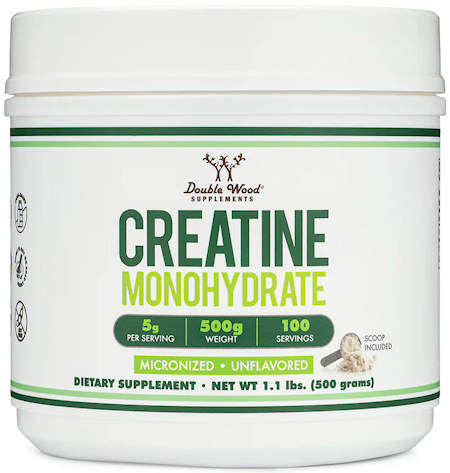
Creatine Monohydrate

Support clearer thinking, faster recovery, more reliable daily energy and stronger muscles with ultra-pure micronized creatine monohydrate.

5 grams per serving  •  100 servings per canister  •  Unflavored  •  Easy to mix

Order Now Supplement Facts How to Use Research FAQs
creatine

Support strength, recovery, mental clarity, and everyday energy with one of the most researched supplements in nutrition.

Creatine is far more important than most people realize. It is not just for bodybuilders. Creatine helps your body recycle ATP — the immediate energy your cells use to think, move, recover, and keep up with life.

That is why creatine has become such a sought-after supplement by people who want to stay capable, active, and mentally sharp as the years go on.

  • Micronized creatine monohydrate for easy daily use
  • 500 grams per canister — about 100 servings at 5 grams each
  • Unflavored powder that mixes easily into water, juice, or shakes
Typical use: 3–5 g daily About 100 servings About 28¢ per serving

Order Creatine Monohydrate 

500-gram canister · about 100 servings · unflavored micronized powder

Comparative Retail Price: $29.95
Our Price: $27.95 (≈ 28¢ per serving)

Save more with subscription

Automatic delivery + lower cost per order

➕ Save more when you order multiple items

Lower cost per unit as quantity increases

Questions before you order? Call 800.704.0986 for friendly help and nutritional guidance.
Size: 
Quantity: 

What Creatine Really Is — and Why It Matters Far Beyond the Gym

Creatine molecule illustration

Most people still think creatine is just for gym culture. That misunder­standing has kept many people from using one of the simplest ways to support strength, recovery, and mental performance.

In reality, creatine helps regenerate ATP, the quick energy currency your cells rely on. Your muscles store most of it, but your brain also uses it heavily. That is why creatine matters not just for lifting weights, but also for focus, resilience, and how well you hold up over time.

It is especially relevant for older adults, women, vegetarians, people recovering from stress or inactivity, and anyone who wants to keep participating fully in life instead of feeling older than they should.

Why Creatine Monohydrate Matters More Than Most People Think

This is not about chasing a bodybuilder look. It is about maintaining the energy systems that influence how well you think, move, recover, and stay engaged in daily life.
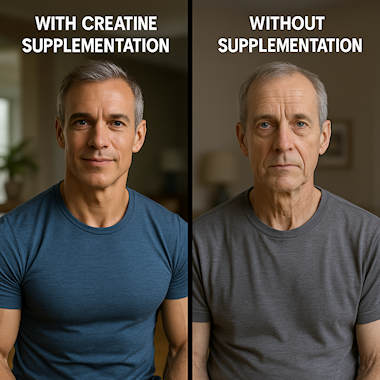
  • Daily capacity: Creatine supports strength, recovery, mental sharpness, and more consistent energy — the very capacities people often notice slipping first.
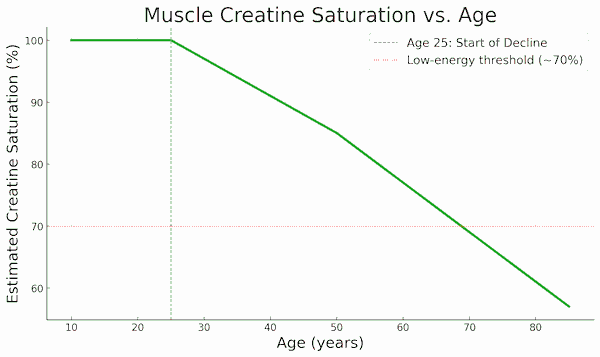
  • creatine loss with age
  • ATP recycling: Creatine helps your body recharge rapid energy in high-demand tissues, especially muscle and brain.
  • Age-related decline: Because most creatine is stored in muscle, lower muscle mass and lower intake can mean lower reserves over time.
  • Low-meat diets: People who eat little or no meat often begin with lower creatine stores and may notice supplementation more clearly.
  • Recovery and resilience: When your cells have a dependable energy buffer, you often feel less drained by training, hard work, and the normal stress of life.
  • The real appeal: Creatine has become a go-to supplement for people in the know because they do not want to feel old, slowed down, or mentally dull before their time.
  • The real goal: It is not about pushing harder every day. It is about staying capable enough to keep showing up fully in your own life.

Why Creatine Monohydrate Has Become Essential for Those Who Refuse to Slow Down

Creatine is about energy for body and brain. It is about protecting and enabling the energy systems that determine how well you think, move, recover, and stay fully engaged in life.

Creatine is one of the most overlooked tools for maintaining strength, stamina, mental sharpness, and resilience as the years go by.

  • Daily Capacity: Creatine supports sharper thinking, stronger muscles, steadier energy, and faster recovery — the very capacities people often notice declining first.
  • Clinically Supported: Decades of research show benefits for both physical performance and cognitive function, including in older adults.
  • Cellular Energy: Creatine helps regenerate ATP, the immediate energy currency used by your most active tissues — especially muscle, brain, heart, and immune cells.
  • Age-Related Loss: About 95% of the body’s creatine is stored in muscle, and those reserves naturally tend to decline over time.
  • Noticeable Consequences: Lower creatine availability is associated with reduced strength, lower output, slower recovery, and decreased mental clarity.
  • Stay Capable: Maintaining creatine helps preserve lean muscle, mobility, and physical resilience — key to staying active, useful, and independent.
  • Brain Support: The brain depends on rapid energy turnover, and creatine helps support focus, clarity, and resistance to mental fatigue.
  • Whole-Body Demand: Your heart and immune system also rely on fast energy availability. Creatine helps support that ongoing demand.
  • Why Informed People Use It: Not to chase an extreme physique — but to avoid feeling old, depleted, physically diminished, or mentally dull before their time.
  • The Real Goal: This is not about pushing harder. It is about maintaining the capacity to keep showing up fully in your own life.

What Happens When Your Body Doesn’t Have Enough Creatine

This doesn’t happen all at once. It happens slowly — and most people don’t realize what’s causing it.

  • Energy Feels Less Reliable: Your cells produce less immediate energy, so you feel more easily fatigued and slower to recover.
  • Strength Gradually Declines: Muscles don’t respond the same way — everyday tasks feel heavier and more effortful.
  • Recovery Takes Longer: What used to take hours now takes days — whether it’s exercise, illness, or simple exertion.
  • Mental Sharpness Dulls: The brain has less rapid-access energy, leading to brain fog, slower thinking, and reduced focus.
  • Physical Resilience Drops: You become less adaptable to stress — both physically and mentally.
  • Activity Naturally Decreases: Not by choice — but because things feel harder, so you do less without realizing it.
  • Life Starts to Feel Smaller: You don’t engage the same way — not because you don’t want to, but because your energy systems aren’t supporting you like they used to.
  • This Is Not Inevitable: In many cases, it’s not “just aging” — it’s a gradual decline in the compounds your body depends on to function well.
 

What Happens When You Restore and Maintain Healthy Creatine Levels

When your cells have the energy they need, things begin to feel different — not artificially stimulated, just more like how your body is supposed to function.

  • Energy Feels More Stable: You notice more consistent energy throughout the day, without the same dips and slowdowns.
  • Strength and Movement Improve: Muscles respond better, and everyday movements feel more natural and less effortful.
  • Recovery Speeds Up: Your body bounces back more quickly from activity, stress, and physical demands.
  • Clearer Thinking: Many people experience better focus, faster recall, and improved mental clarity.
  • Greater Physical Confidence: You feel more capable — which naturally leads to staying more active and engaged.
  • More Participation in Life: You don’t hold back the same way — you show up, move more, think more clearly, and engage more fully.
  • A Return to Baseline — Not a Boost: This isn’t about becoming someone new — it’s about restoring the capacity your body was designed to have.
 

Think of creatine as a cellular energy buffer. It helps recharge quick energy every time you think, move, breathe, recover, or rebuild. When that buffer is low, your highest-demand tissues feel it first. When it is restored, life often feels more doable again.

Why DoubleWood Creatine is the Best Creatine You Can Buy

Silky mixing. Transparent testing. Straight-up creatine monohydrate—no fluff, just results.

Micronized Powder Unflavored • No Fillers Third-Party Tested COAs Available Vegetarian • Non-GMO

What makes it stand out

  • Ultra-smooth, easy mixing
    Micronized creatine disperses fast with minimal grit—great in water, juice, or shakes. It's so smooth you won't even know it's there.  
  • Transparent quality
    Every batch is third-party tested with public Certificates of Analysis (COAs) so you can verify purity and safety yourself.
  • High-purity creatine monohydrate
    Listed at ~99% purity and manufactured in the USA from globally sourced ingredients.
  • Simple dosing
    100 servings per jar (5 g per scoop). Unflavored, vegetarian, non-GMO—easy to stack with anything.

What people are saying

“Texture and taste (none) were great for mixing.”
— Customer review on DoubleWood’s creatine powder
“Mixed effortlessly with just a spoon in plain water, with zero chalkiness.”
— Hands-on tester review

*Dietary supplements aren’t intended to diagnose, treat, cure, or prevent disease. Always consult your healthcare professional.

Creatine is one of the simplest ways to help maintain strength, energy, and mental clarity as the years go by.

For many people, it’s not about doing more. It’s about maintaining the capacity to keep doing what they already value — without feeling slower, weaker, or less sharp along the way.
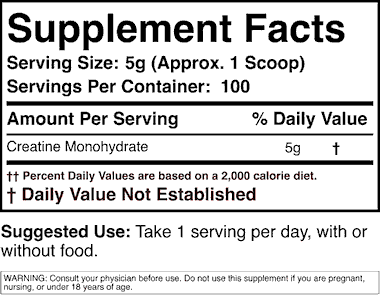
Creatine Monohydrate — Supplement Facts & How to Use

Creatine Monohydrate facts

How to Use Creatine

Creatine supports energy metabolism in muscles, the brain, and other high-demand tissues. It’s especially valuable for athletes, those with metabolic or liver challenges, individuals seeking fat loss, and even people looking to improve skin hydration and reduce facial wrinkles.*

For best results, take 1 to 2 teaspoons (3–5 grams) of creatine monohydrate once or twice daily. During intensive phases (e.g., bodybuilding, recovery, or visible aesthetic goals), some may take up to 3 servings per day under guidance.

Mix into warm water, juice, or any non-acidic liquid. Drink immediately. For enhanced absorption, take with a small amount of carbohydrate (like fruit or yogurt), unless following a ketogenic protocol.

*These statements have not been evaluated by the FDA. This product is not intended to diagnose, treat, cure, or prevent any disease.

Quick Facts

  • Form: micronized creatine monohydrate powder
  • Size: 500 grams per canister
  • Servings: about 100 at 5 grams each
  • Use: typically 3–5 grams daily
  • Taste: unflavored and easy to mix

$27.95 · about 28¢ per serving

Order This Creatine

Frequently Asked Questions About Creatine

What Makes Our Creatine Unique?

Our micronized creatine monohydrate is ultra-pure, fast-dissolving, and tested for potency and safety. It absorbs efficiently and mixes effortlessly, making it easy to incorporate into your daily routine without clumps or grit.

At What Age Should You Start Taking Creatine?

Creatine is safe and beneficial for a wide range of ages. While it's most popular among athletes and fitness enthusiasts, people over 40 often benefit even more due to natural declines in muscle mass and cellular energy. Research also supports its use in teens under appropriate guidance, especially for sports or cognitive performance.

Does Creatine Only Help Athletes?

Not at all. Creatine supports energy production, brain function, and muscle maintenance in everyone. It’s especially useful for older adults looking to maintain mobility, cognitive clarity, and recovery after illness or stress.

How Much Creatine Should I Take?

A standard maintenance dose is 3–5 grams per day. Some protocols begin with a loading phase (20g/day split over 4 doses for 5–7 days), but it’s not required. Long-term low dosing achieves the same saturation. (If you're in a hurry to remodel your tissues, however, Creatine is very safe at higher doses of 20g/day.)

Is Creatine Safe for Long-Term Use?

Yes. Creatine is one of the most studied supplements in history. Decades of research confirm it is safe when used properly, even for years. It does not harm kidneys in healthy individuals and may support brain and heart health over time.

Is Creatine Safe for Everyone — or Just for Athletes?

Yes, creatine is safe for most people — and it’s not just for athletes.

Creatine is one of the most studied and proven supplements in existence, with decades of research supporting its safety for brain, muscle, and cellular energy — even in older adults. While it’s popular in fitness circles, creatine’s benefits extend far beyond muscle:

  • 💡 Cognitive support: Enhances memory, focus, and mental clarity — especially under stress or sleep deprivation.
  • Mitochondrial energy: Increases ATP production in brain and muscle cells — helping you think clearer and move stronger.
  • 🧠 Neuroprotection: Shows potential in protecting the brain against aging-related decline.
  • 👴🏻 Aging & resilience: Studies show creatine helps preserve strength, balance, and energy in people over 50.

It’s generally safe for long-term use in healthy individuals. However, those with kidney disease or chronic dehydration should consult a healthcare provider first — not because creatine is inherently dangerous, but because their systems are more fragile.

Bottom line: If you want more mental stamina, cellular energy, and physical resilience, creatine may be one of the safest, most effective tools you’re not using.

Will Creatine Make Me Gain Weight?

Creatine may increase water content in muscles slightly (hydrating them), which can add 1–3 pounds. This is not fat gain, and many people feel stronger and more energized. There’s no impact on fat gain unless paired with excess calories.

Is Creatine Helpful for Brain Function?

Yes. Creatine supports cognitive performance, especially under stress, sleep deprivation, or mental fatigue. It helps the brain regenerate ATP quickly, which enhances focus, memory, and mental clarity.

What Should I Mix Creatine With?

You can mix creatine with water, juice, or your protein shake. Avoid hot liquids. Some prefer taking it post-workout or first thing in the morning with other mitochondrial-supportive supplements like CoQ10 or PQQ.

Can Vegetarians and Vegans Take Creatine?

Yes, and they should. Creatine is found primarily in meat and fish. Vegans and vegetarians typically have lower creatine stores and see significant benefits in strength, cognition, and energy with supplementation.

Should I Cycle Creatine?

There’s no strong evidence that cycling creatine is necessary. Most people take it daily, year-round. However, some prefer 4-week-on / 1-week-off cycles to periodically reset, especially if combining with other performance enhancers.

Does Creatine Work Without Exercise?

Yes. While results are amplified with physical activity, creatine still improves brain energy, supports recovery, and helps preserve lean muscle even in sedentary or aging populations.

What's the Difference Between Creatine and Creatinine

They sound similar—but play very different roles in your body. Here’s what you need to know:

Creatine

  • What it is: A compound made from amino acids (arginine, glycine, methionine) stored in muscle and brain.
  • Role: Helps regenerate ATP—the body’s cellular fuel—especially during high-intensity activity.
  • Uses: Improves muscle strength, endurance, brain performance, and recovery.
  • Form: Supplemented as creatine monohydrate or creatine HCl.
  • Health impact: Safe, well-studied, and widely beneficial for physical and cognitive energy.

Creatinine

  • What it is: A waste byproduct created when creatine breaks down in muscle tissue.
  • Role: No active function—used as a marker to assess kidney filtration.
  • Uses: Blood creatinine levels help evaluate kidney function in clinical labs.
  • High levels may indicate: Kidney stress, dehydration, or excessive muscle breakdown.

🔍 Key Differences at a Glance

Feature Creatine Creatinine
Function Energy production Waste marker
Where found Muscles & brain Blood & urine
Supplement form Yes No
Clinical use Improves performance Assesses kidney health

Bottom line: Creatine powers your performance; Creatinine helps monitor your kidney health.

  • Creatine for Cognitive Enhancement: A 2018 systematic review in *Experimental Gerontology* (Avgerinos et al.) found that creatine supplementation improves short‑term memory and reasoning in healthy adults, particularly under stress or during sleep deprivation.
  • Creatine Boosts Memory & Processing Speed: A 2024 meta-analysis in *Frontiers in Nutrition* (Xu et al.) showed significant improvements in memory (Hedges’s g = 0.31) and information processing speed after creatine supplementation, especially among older adults and women.
  • High-Dose Creatine Counteracts Sleep Deprivation: A 2024 *Scientific Reports* study reported that a single high dose of creatine (0.35 g/kg) reversed cognitive decline and improved brain energy markers during 21 hours of sleep deprivation.
  • Creatine & Mood – Depression Adjunct Therapy: A randomized trial (Rocha et al., 2013) found creatine enhanced antidepressant effects in women with major depressive disorder, potentially via improved brain energy metabolism.
  • Neuroprotection & Brain Injury Recovery: A comprehensive review (2016) highlights creatine’s role in stabilizing mitochondrial function and reducing damage in traumatic brain injury, Parkinson’s, and ALS.
  • Memory Improvement in Older Adults: A 2023 *Nutrition Reviews* report identified moderate-strength evidence that creatine supplementation improves memory and cognitive performance in adults aged 66–76.
  • Creatine supplementation improves muscular performance in older men and women.
  • The combined effects of creatine monohydrate and resistance training in older adults: A meta-analysis.
  • Creatine supplementation and brain health in aging adults.
  • Creatine Enhances Glycogen Replenishment & Endurance: In cyclists, creatine combined with carbohydrates led to greater muscle glycogen recovery and improved endurance versus carbs alone.
  • Creatine Speeds Exercise Recovery & Reduces Inflammation: A 2004 study found that creatine supplementation reduced markers of muscle damage (CK, LDH) and inflammation (PGE₂, TNF‑α) after a 30 km race.
  • Creatine Eases Muscle Soreness & Supports Recovery: A 2022 meta-analysis showed that acute creatine supplementation minimized exercise-induced muscle damage markers (CK, DOMS) after intense workouts.
  • Creatine for Long COVID & Post-Viral Fatigue: A preliminary trial (2023–24) found that six months of 4 g/day creatine improved fatigue, muscle strength, and brain fog in post-COVID patients.
  • Creatine in Endurance Athletes: Reviews consistently show that creatine improves endurance performance by increasing glycogen storage, reducing lactate, and speeding recovery.

Copyright 2002 - 2026. All rights reserved.

These statements have not been evaluated by the Food and Drug Administration. No product mentioned herein is intended to diagnose, treat, cure or prevent any disease. If you are pregnant, nursing, taking medication, or have a medical condition, consult your physician before making any lifestyle change, including trying a new product or food.

The information on this website is intended as a sharing of knowledge and information from the research and experience of the Healthy-Living.Org staff and contributors. It is not intended to replace a one-on-one relationship with a qualified health care professional and it is not intended as medical advice. You should not use the information on this site for diagnosis or treatment of any health problem or for modification of any medication regimen. You should consult with a healthcare professional before starting any diet, exercise or supplementation program, before starting or discontinuing any medication, or if you suspect you have a health problem. You should keep in mind that cited references to ongoing nutritional scientific study are most likely not accepted by the FDA as conclusive. These references and mentions of benefits experienced by others are disavowed as product claims and are only included for educational value and as starting points for your own research. No food or supplement can be considered safe for all individuals. What may benefit 999,999 of a million people may harm you. Therefore, no one can take responsibility for your health except you in concert with your trusted health professional.